Bulk carriers

Berge Stahl

Scrapped · Source reviewed 2026-09-09

An ore carrier built around the demands of moving iron ore between deep-water terminals. It was dismantled at Gadani in 2021. Sources ↓

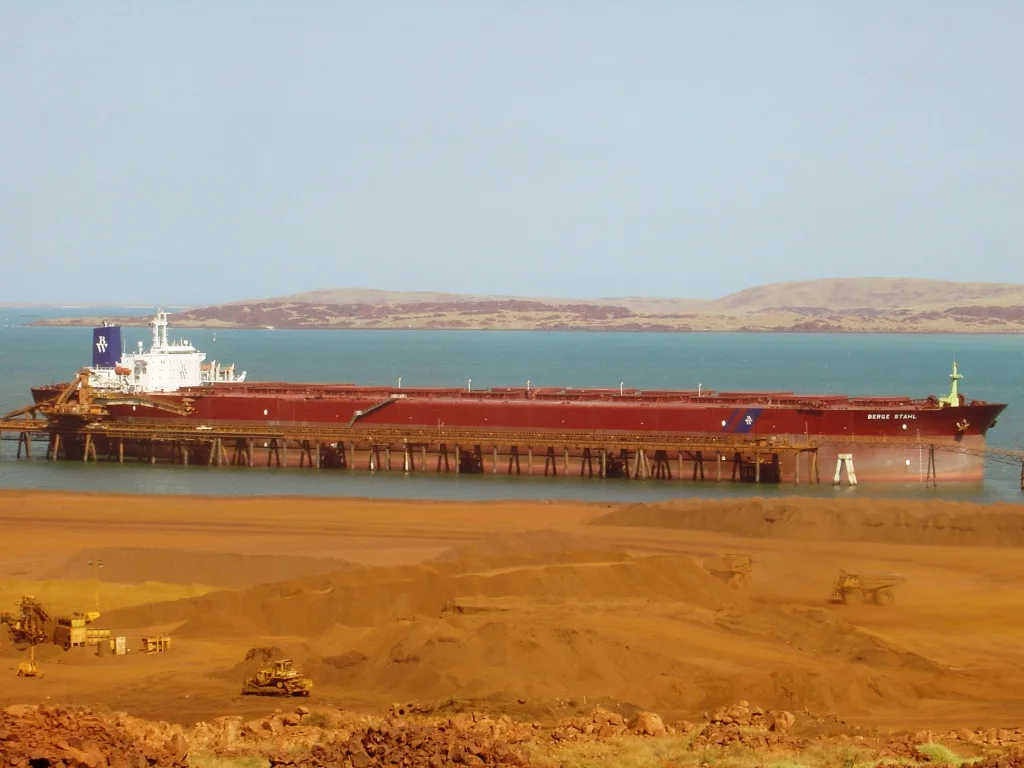
Berge Stahl in an archival photograph uploaded in 2006, in its earlier BW livery.

Berge Stahl in an archival photograph uploaded in 2006, in its earlier BW livery.

Ctbolt / Wikimedia Commons · Public domain. Resized and converted to WebP; directory thumbnail cropped.

LENGTH OVERALL342.08 m
GROSS TONNAGE175,720 GT
LENGTH RANK IN DIRECTORY#183

Vessel particulars

Reported values from the references below. Cruise-ship beam uses the waterline measurement where supplied. Year may refer to delivery or first service.

Length overall342.08 m
Gross tonnage175,720 GT
Beam63.53 m
Year in source1986

This vessel has been dismantled.

Its place in the fleet

This vessel ranks 183 by reported length and 183 by gross tonnage in this directory. Equal measurements share a rank.

Length comparison

Berge Stahl · 342.08 m
Seawise Giant · 458.45 m

Linear bars compare reported lengths only. They are not hull drawings. Reference measurement.

Where is it now?

This vessel has no current AIS position. Open the vessel map →

BEHIND THE PARTICULARS

Built for a purpose

Builder / location
Hyundai Heavy Industries, South Korea
Original role
Deep-water iron-ore transport

Why it was built

Berge Stahl was a highly specialised ore carrier. Its story is inseparable from the terminals able to receive a very large, deeply loaded bulk ship. Rotterdam used it to explain the importance of deep water to the port and to the steel industry served from its hinterland.

Port of Rotterdam: an ore-carrier landmark ↗

A long relationship with Rotterdam

The port’s 2016 annual report records its 249th and final Rotterdam arrival on 11 December 2016, after transporting nearly 90 million tonnes of iron ore there during its service. A repeated industrial route can be historically significant even when it is less glamorous than a liner’s maiden crossing.

Port of Rotterdam: 2016 annual report ↗

Reading a bulk carrier’s dimensions

For an ore carrier, draft and cargo weight can be more decisive than the height of its superstructure. A long hull spreads the cargo along its length, while the loading condition determines how deeply it sits. The historical profile and its referenced disposal status remain available, but a scrapped ship is never assigned a current AIS position.

Rotterdam: iron ore terminals and depth ↗

Historical information reviewed 9 September 2026. Documented journeys are not live vessel positions.

Sources & measurement notes

Length measures the vessel from end to end. Gross tonnage measures enclosed volume, not weight. Historical GRT is excluded from the GT ranking. Published figures can differ by configuration and measurement precision.

  1. Berge Stahl ↗

    Vessel identity, dimensions, tonnage and historical status. Historical gross register tonnage is not treated as modern GT.

The main specification source is identified above. Additional references may report different configurations or precision. How this directory is compiled.

Explore related ships

ADVERTISEMENT