Fincantieri signs for two Carnival ships
The builder announced a contract for two more dual-fuel cruise ships. An order records the programme commitment before construction and delivery.
An independent maritime reference documenting 230 ultra-large vessels. Compare source-linked dimensions, tonnages, shipyard origins and received AIS reports. Verification levels differ by record; this is a selected fleet, not a global register.
By length among self-propelled ships, Seawise Giant holds the all-time historical record at 458.45 metres. It reached 564,763 tonnes deadweight and was dismantled in 2010. Read the verified history →
Historic and shipyard pins indicate approximate areas, not exact berths or navigable routes. Current-vessel pins, when available, show timestamped AIS reports. A missing report does not establish a vessel’s location.
Selected milestones from shipyards and vessel reports, with the sources and dates behind each entry.
The builder announced a contract for two more dual-fuel cruise ships. An order records the programme commitment before construction and delivery.
Meyer Turku reported that the fourth Icon-class hull had entered the water, with further outfitting ahead.
The ship entered the water at Fincantieri’s Marghera yard before its planned 2027 debut.
Fincantieri delivered the fourth ship in the Prima programme. Compare its sister Norwegian Aqua for the expanded design.
The former Royal Caribbean sister ships arrived at Aliağa after service with Pullmantur. The date marks arrival for dismantling.
The former tanker and offshore storage vessel made its final voyage as Mont and was dismantled at Alang.
Explore three cutaways, from engine rooms and ballast tanks to cargo holds and passenger decks.
Open the cutaways →Change waves, damping, cargo and ballast in two interactive educational models.
Try the models →Follow construction, service, conversions and documented events across the fleet.
Browse ship histories →Explore documented journeys and sampled AIS reports, with the difference made explicit.
Explore the voyages →Look closer with attributed galleries, dry-dock scenes and photographs from across the fleet.
Browse the photographs →Read the illustrated series on people, fuel, machinery, provisions and operations.
Go aboard →Understand the recovery of Ever Given and Costa Concordia through sources and diagrams.
Read the case studies →Choose two or three vessels and compare dimensions, capacity, purpose and propulsion.
Build a comparison →Put a vessel’s length beside a sprint straight, an example pitch or the height of the Eiffel Tower.
Open the size explorer →Trace historical milestones in length, gross tonnage and cargo capacity without mixing their units.
Read the record timeline →See report ages, verified AIS identities and coverage gaps across the fleet.
Open vessel tracking →Length and beam against the stated limits of Panama, Suez and the Strait of Malacca.
Set the locks →Type mix, size distributions and the top longs and tonnages, all computed from the directory.
View the charts →Sister vessels grouped by design families across the yards.
Browse the classes →Ships on contract and under construction, with sources and claimed delivery years.
Survey the future →Plain-language definitions of ship measurements, tonnages, canal standards and shipyard terms.
Read the glossary →Find any vessel, sister class, shipyard, news post or guide across the entire site.
Search the fleet →Why it was built. Where it went. What became of the ultimate supertanker.
Explore the full vessel archive →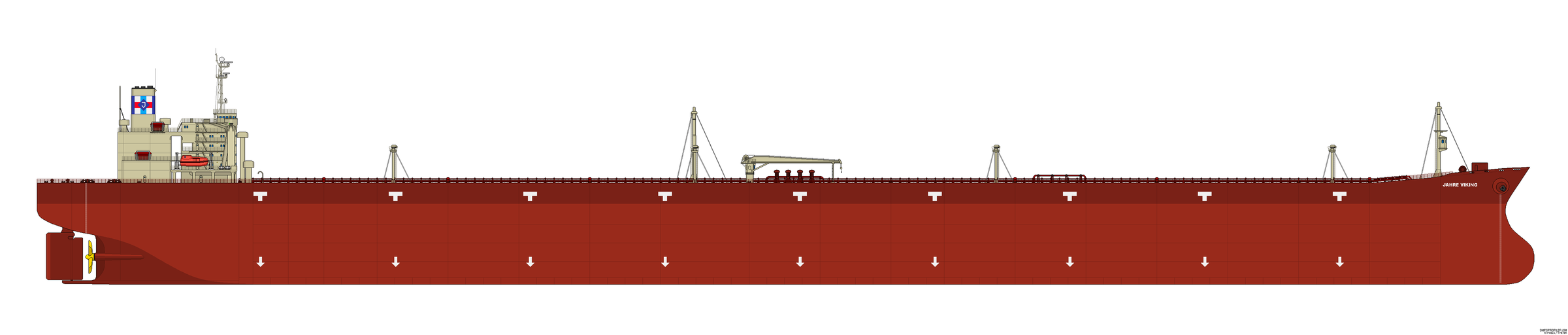
The major shipbuilding yards behind the world's biggest hulls, from Japan and South Korea to China and Europe.
Visit the shipyards →The coastal recycling centers where retired maritime giants are dismantled, steel is recovered, and careers conclude.
Explore ship recycling →Construction milestones, keel layings, and maiden deliveries with dates and original shipyard citations.
Read the news →Technical analyses of hull structural limits, dual-fuel LNG propulsion, and modern shipyard engineering.
Explore the engineering stories →The collection is expanding. Current-position radar markers appear for published, tracked vessels with received transponder reports. Illustration: Shipsprofiler, CC BY-SA 3.0, resized and converted to WebP.
Required storage remembers your theme and privacy choice. Optional Google Analytics measures site use. Advertising is disabled. Read the privacy policy.
