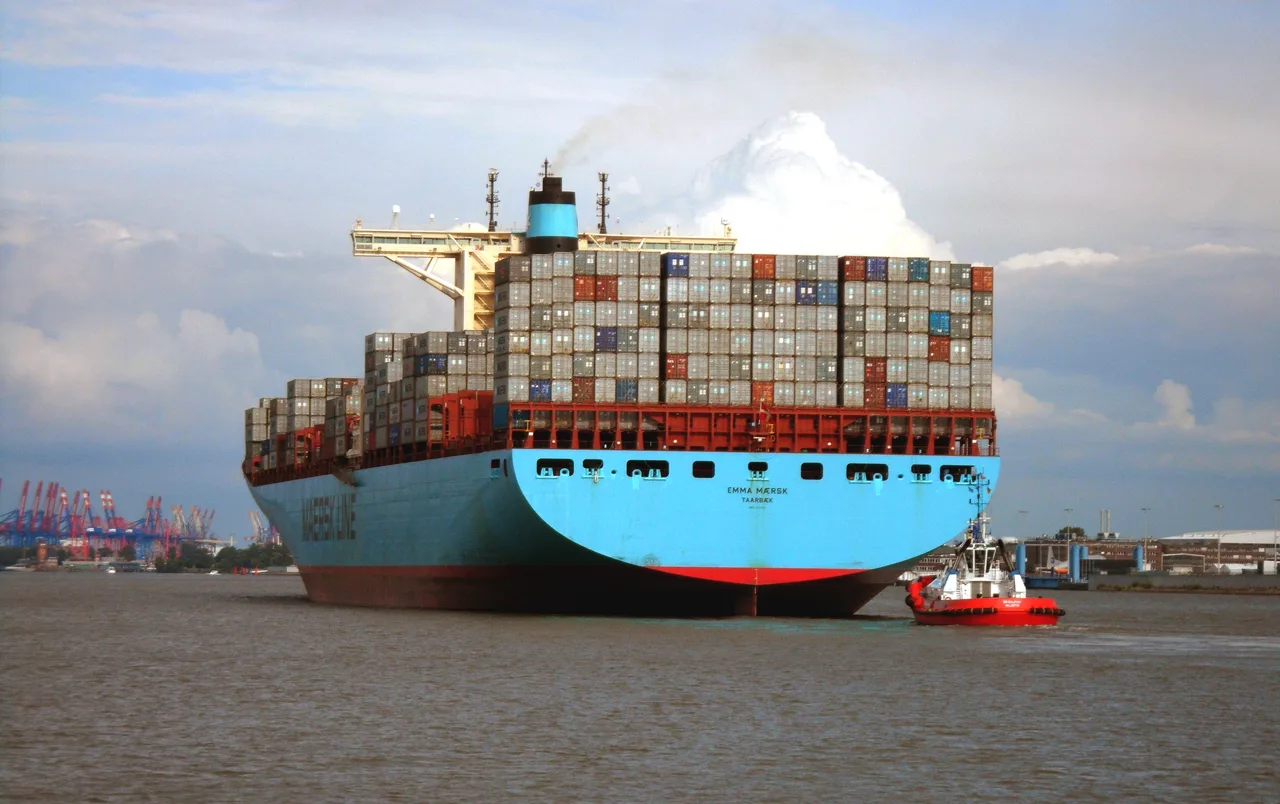
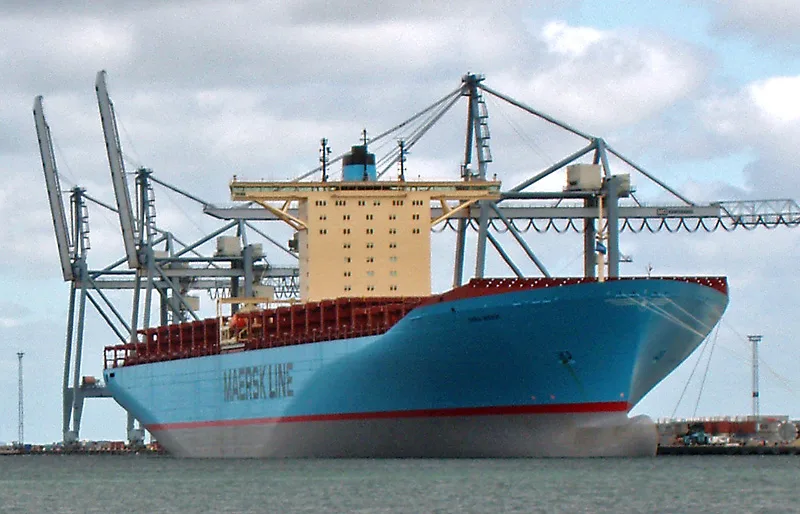
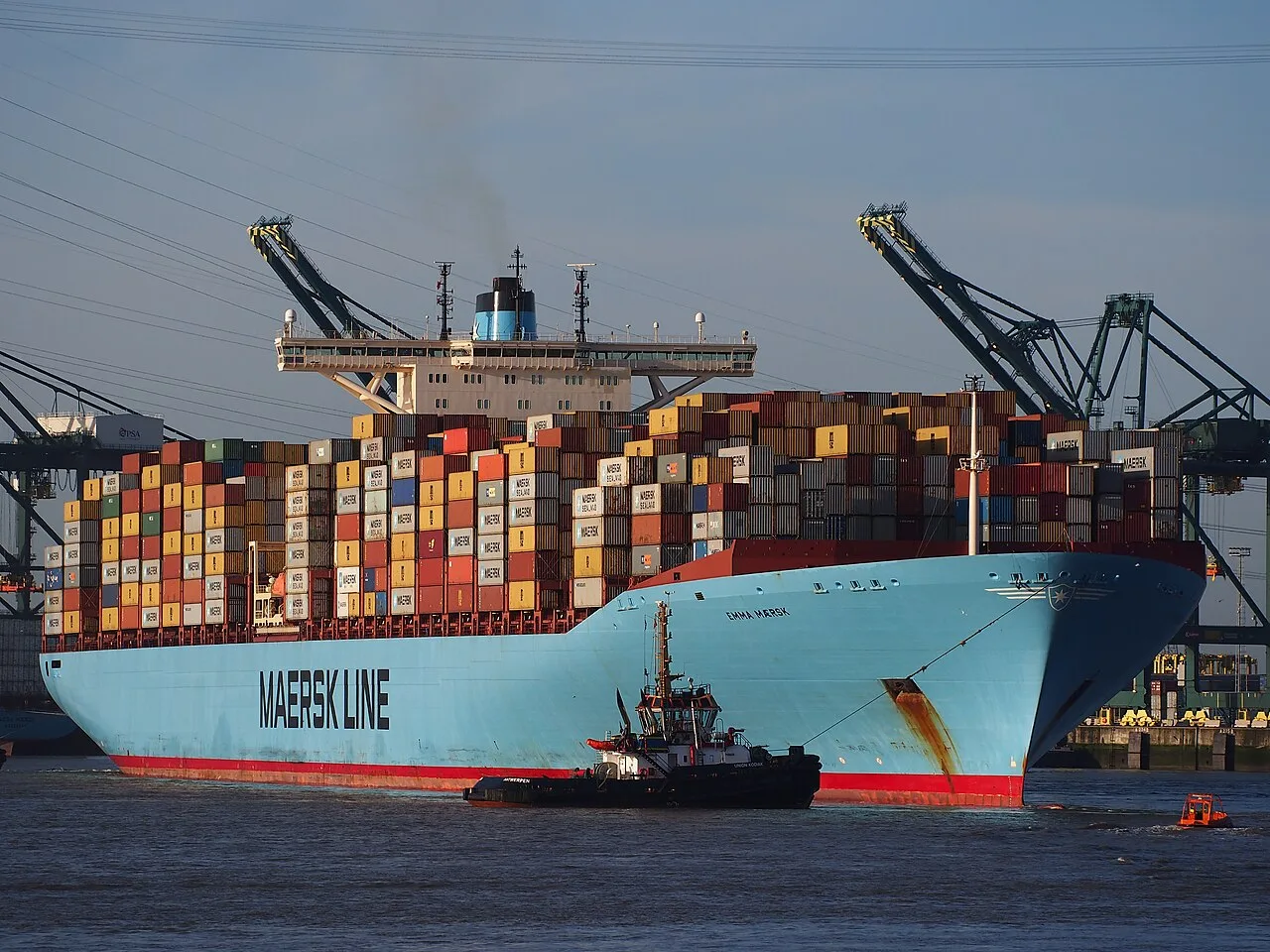
The lead vessel of Maersk’s E class, built at the Odense yard in Denmark. Its large single-engine design marked a major step in container-ship scale. Sources ↓
Reported values from the references below. Cruise-ship beam uses the waterline measurement where supplied. Year may refer to delivery or first service.
Linear bars compare reported lengths only. They are not hull drawings. Reference measurement.
Where is it now?
An AIS identity has not yet been verified for this profile. No current location is inferred. Open the vessel map →
BEHIND THE PARTICULARS
Built for a purpose
Builder / location
Odense Steel Shipyard, Denmark
Original role
Large-scale container transport
Why it was built
Emma Maersk marked a major step in container-ship scale when it entered service in 2006. Yantian’s contemporary port report identifies it as the world’s largest container vessel at the time. The commercial logic was to move very large cargo volumes through a limited number of capable hub terminals.
On 1 February 2013, water entered the engine room near the Suez Canal. Maersk’s subsequent report described the immediate repairs and the onward journey. This is a reminder that a ship’s history includes maintenance, disruption and recovery as well as launches and size records.
The name Emma Maersk has also been used for other vessels. This profile concerns the 2006 container ship, not an earlier tanker. The IMO identifier in the specification sources is the more reliable way to follow a ship through photographs, records and ownership changes. That is also why the site does not activate tracking solely from a matching name.
Maersk reported flooding near the Suez Canal and described the ship’s onward tow after immediate repairs. A recovery milestone is not a normal cargo-port call.
Length measures the vessel from end to end. Gross tonnage measures enclosed volume, not weight. Historical GRT is excluded from the GT ranking. Published figures can differ by configuration and measurement precision.
Vessel identity, dimensions, tonnage and historical status. Historical gross register tonnage is not treated as modern GT.
The main specification source is identified above. Additional references may report different configurations or precision. How this directory is compiled.